
Privatized healthcare was supposed to save the lives of the incarcerated. Critics say it may be killing them.

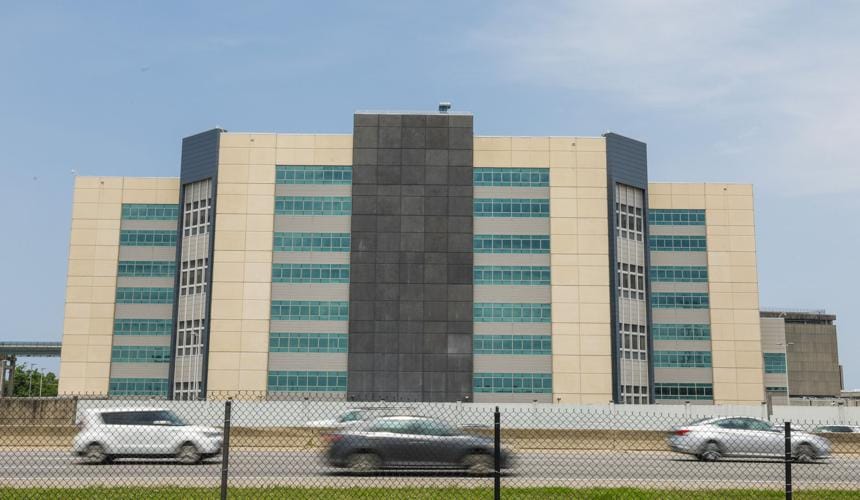
When exposed to just above 90 degrees, the human body experiences stress. The body’s airways tighten as the air quality diminishes and becomes heavier. The high temperatures can make it hard to breathe — dehydration can set in — with prolonged exposure potentially leading to heat exhaustion within 10 to 15 minutes.
In June 2024, Michael Broadway, who was incarcerated at Stateville Correctional Center in Illinois, was left gasping for breath for just under an hour, Bolts Magazine reported. He was in his cell, where the windows were nailed shut, and there was no air-conditioning. Incarcerated men in neighboring cells estimated temperatures reached between 115-120 degrees.
According to court documents, when the facility’s medical staff arrived, they didn’t bring an emergency bag with an AED or Ambu Bag, devices that are meant for those in cardiac arrest and struggling to breathe, respectively. There was a stretcher, but there were no handles.
A nurse, according to an affidavit, stated, “It’s too hot. I’m not going up there. Tell him to come down here.” When the nurse did get there, she administered him with Narcan, a drug used reverse opioid overdoses, twice.
The nurses allegedly didn’t immediately call in a Code 3, which alerts all correctional and medical staff to a medical emergency. By the time Broadway was transported to the hospital, he was dead, his widow Chunece Jones-Broadway alleges in a lawsuit she brought against the state of Illinois in March.
The lawsuit is one of hundreds involving Wexford Health Sources, which provides medical care in prisons and jails across that country and which took over control of healthcare in Orleans Justice Center, the Orleans Parish jail, in June 2024.
Billed as a way for governments to save money and improve care for incarcerated people, critics say the privatization of these services has made healthcare about profit — not making people healthier.
The industry is “entirely profit-driven,” says Bianca Tylek, executive director of Worth Rises, a nonprofit aimed at “exposing the commercialization of the criminal legal system.”
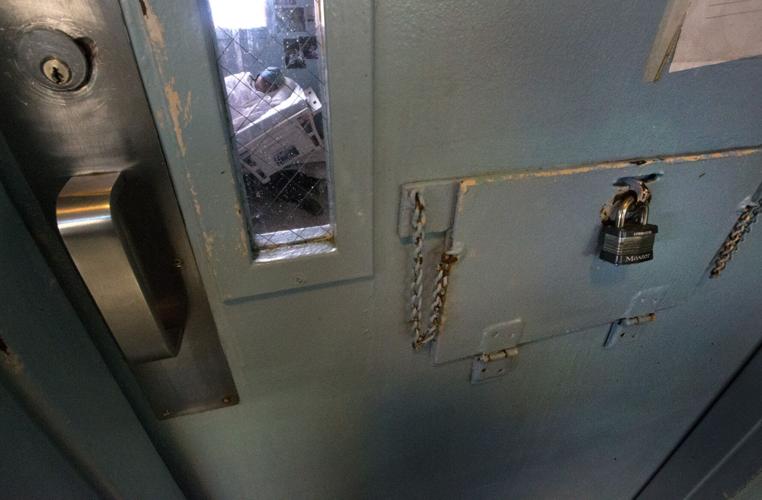
Over the past half-century, healthcare for incarcerated people has become a big business. While governments promised lower costs and better care, advocates for the rights of the incarcerated say the reality on the ground is much more troubling.
For instance, a 2020 review by Reuters found there are higher rates of death in correctional facilities that have private healthcare providers instead of government-provided healthcare, ranging from 18% to 58% more.
The private prison healthcare industry came into fruition in the 1980s and 90s after a 1976 Supreme Court ruling in Estelle v. Gamble made it easier for the incarcerated to sue correctional facilities for poor healthcare, or lack thereof.
According to the Prison Policy Initiative, by the 1990s, almost every state prison system and hundreds of jails were under court-ordered injunctions and consent decrees. That’s around when many prisons and jails started outsourcing their healthcare.
That decision came at a time when privatization of public sector services was coming into vogue with Republicans and Democrats alike, and many governments quickly began turning to private healthcare companies.
As of 2024, more than 60% of jails were using third-party contractors, according to a paper by the Disability Rights Education and Defense Fund. According to Reuters, small to mid-sized counties/parishes, who are often cash-strapped, are the most likely to use their services. As of 2022, the industry is worth $9.3 billion.
Bruce Reilly of VOTE, a Louisiana advocacy group run by formerly incarcerated people, says that one of the main reasons jails and prisons continue to use third-party contractors boils down to diminishing their own liability.
“When it comes to things going wrong, then the company becomes liable,” says Reilly.
These contracts can be lucrative. According to the contract between Wexford and the city obtained by Gambit, the city is paying Wexford $22.9 million for the first year, and $23.5 million for the second year.
Wexford did not respond to questions about their profits in 2025.
Working on contract also means that companies have a built-in incentive to keep costs down, and if that ends up in substandard care “it’s the [inmates] who suffer,” Reilly says.
In practice, critics argue, this can end up making cost savings and profits the primary goal for companies.
Oregon Live reported in 2018 that another industry giant, Corizon (now YesCare), incentivized their doctors to avoid sending patients to the emergency room. The Disability Rights Education and Defense Fund report, meanwhile, alleged the company paid bonuses to doctors anytime they averted an ER visit.
“The way that they make profit is by not providing much of a service,” Reilly argues.

Outside of the profit motive, critics point to a number of other issues with the industry. For instance, there are no enforceable uniform industry standards, and accreditation in the National Commission on Correctional Healthcare is voluntary.
As private entities, they also are not bound by the Freedom of Information Act, lowering government oversight and public accountability.
Tylek and other critics also point out it’s not uncommon to have situations in which a jail or prison switches contractors because of problems with care, and then the new contractors will rehire many of the doctors, nurses and administrators who worked for the previous company.
For instance, when Wexford took over healthcare at the Orleans Justice Center in June 2024, they retained some employees from Wellpath, according to the Times-Picayune.
While on the one hand retaining staff can make sense since they are already familiar with the facility and any long-term patients, Tylek argues it can lead to situations in which potential bad actors end up remaining on the job.
Between 2018 and 2025, Wellpath has faced 1,500 lawsuits. They entered into bankruptcy in 2024 with $644 million in debt, and exited in 2025, paying out $15.5 million to vendors and some incarcerated people who’d sued the company over the quality of their care.
In 2014, the Orleans Parish Sheriff’s Office contracted with Correct Care Solutions (now Wellpath after a merger) to be their healthcare provider for the city jail. This came on the heels of a consent decree — a legally binding court order mutually agreed to by both parties that settles a lawsuit — in 2013 after years of conditions that the Department of Justice found to be unconstitutional. Court documents and plaintiffs in a legal complaint alleged years of beatings and assaults, mental illness left untreated for months, suicides and rapes.
U.S. District Court for the Eastern District of Louisiana Judge Lance Africk noted that individuals with mental illnesses were incarcerated in cells with feces smeared walls.
The partnership with Wellpath was supposed to be one of the remedies to the poor healthcare conditions of the facility. Wellpath is an industry giant that is in about 37 states and servicing about 550 facilities.
But the accusations of subpar care have continued. According to The Lens, Wellpath was named in several wrongful death suits filed over deaths in custody at the OJC.

When Deidre Craige’s father, Ronald, was arrested in 2020, she says, he was a “perfectly healthy” man in his mid-60s — except for his diabetes. He was a painter and carpenter.
Several years later when she arrived at the Orleans Parish Jail to pick him up, Craige says she was greeted by a man in a wheelchair who needed to wear a diaper and smelled of feces.
Craige’s father faced several issues while in jail. Wellpath was providing health care at the time.
According to his daughter, whenever they spoke on the phone Craige would complain about having stomach issues and said that while he was supposed to be “on a list” to receive an ultrasound. That never happened.
The Times-Picayune also reported that Ronald Craige threw up into a trash can and was too ill to even attend the first half of his trial.
According to the Lens, in August 2022 he took part in a multi-day protest on his housing unit at OJC. When the Orleans Parish Sheriff’s Office and the Louisiana Department of Public Safety and Corrections entered the unit to retake the floor, he was allegedly handcuffed, then kicked in the face. Craige alleged that he also didn’t receive his insulin for three days, a claim that OPSO has refuted.
According to Deidre Craige, a few months later in November 2022, her father suffered a brain aneurysm and laid unresponsive on the floor in the cell, vomiting blood while other incarcerated men beat on the walls and screamed to get help. She alleges the guards initially thought Ronald was faking, and 30 minutes later, he was finally retrieved in order to get aid.
In subsequent emails Deidre Craige sent to the sheriff’s department and then-Mayor LaToya Cantrell, she said that when her father finally arrived at University Medical Center, he had a blood pressure of 140/120 and dangerously high sugar levels of 315. He was admitted and rushed into emergency brain surgery, she said.
Craige says she was never officially notified about her father’s condition, alleging that instead
multiple incarcerated men ended up calling her.
“The jail never called me,” she says.
According to the emails Deidre Craige sent, her father was released on Nov. 16, 2022, but less than 24 hours later, he was sent back to the hospital.
After he was released, her dad was diagnosed with chronic kidney failure, Deidre Craige says.
Her father’s condition had deteriorated in the jail to such a point that the judge lowered his bond so that he could be released, she says, and he is now on dialysis.
Eddie Bolton, who was released from OJC earlier this year, says he felt there were a couple of healthcare employees who showed they cared about the wellbeing of incarcerated people.
But overall, “as a group they don’t really care about you,” he says.
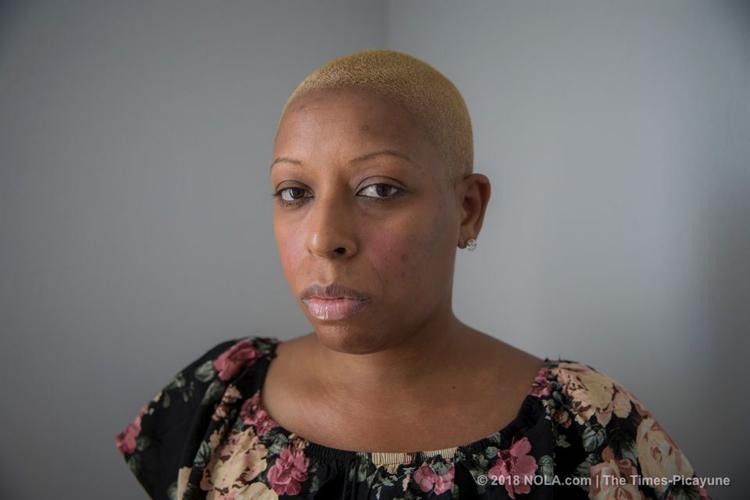
Natalie Henderson worked as a nurse for Wellpath until 2018, when they were still Correct Care Solutions, and has since become a whistleblower. She told Gambit the company’s care was “terrible.”
In her time there, she says she witnessed instances of ignored sick-calls and delayed treatment, including one she says led to the death of an incarcerated man in 2017.
As the Times-Picayune reported, Henderson noticed the man had a heart rate of 200 beats per minute and blood pressure at “stroke levels” and was showing signs of gastrointestinal bleeding. She says she told her supervisor to take him to the hospital, but he wasn’t brought to the emergency room and ended up dying on the floor of the jail’s medical clinic.
“They kept him there when I insisted that he needed to be seen out in the ER.” Henderson says, adding, “he was only in jail for two days.”
Henderson says sometimes supervisors don’t want to send patients to the emergency room because it’s expensive.
“A lot of those companies … they fire you, they get mad, the supervisors get mad, they don’t want you to send patients out because they want the money, so they can put it in their pockets,” she says. “But the patients suffer.”
In the aftermath of Edwards’ death, Henderson ran into another issue while working as a nurse in the jail. Some of the detainees got ahold of pictures of her in a bikini, and she experienced sexual harassment, which she reported to deputies and supervisors, she alleges. She says she was told by deputies that she “shouldn’t be so fine.”
Henderson was later terminated by Wellpath.
“They didn’t protect the nurses,” she says. “The deputies didn’t give a damn.”
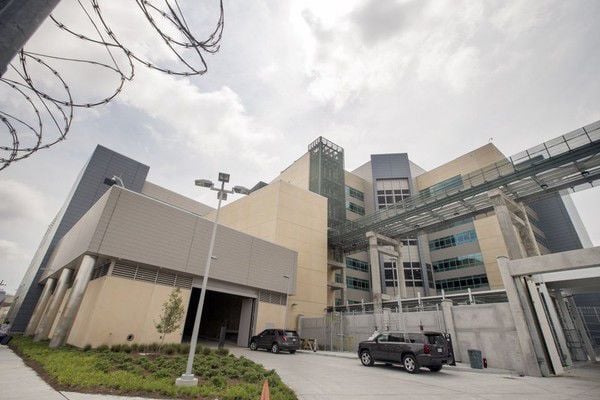
Henderson sued Wellpath in 2018 as well as then-Sheriff Martin Gusman for retaliation and sexual harassment.
When Wellpath’s contract with the city was under consideration in 2022, community members showed up to speak out against them. The committee instead eventually landed on Pittsburgh-headquartered Wexford, in partnership with Tulane and LSU.
Reilly of VOTE says he and others felt the contract should have gone to a local company. “We’re sending profits to shareholders at the expense of having actual health care providers,” he said.
Critics, including Reilly, point to a number of incidents involving Wexford at the OJC that they say validate their warnings.
For instance, in 2024 a woman with fraudulent credentials allegedly worked for Wexford at OJC for almost a year, administering drugs to the incarcerated. In March 2026, meanwhile, the Times-Picayune reported that the medical director, Andrea Blake, was abruptly fired without the sheriff’s office being notified first.
Wexford, however, denied this claim in a statement. “We provided designated OPSO staff with what we consider appropriate notice. We will not provide additional comment on personnel or human resources matters,” the company told Gambit in an email.
However, according to transcripts obtained by Gambit, Judge Africk chastised Doug Mote, corporate director of jail operations, for not alerting OPSO, federal consent decree monitors or the court to the fact that Wexford had launched an investigation into Blake and of not having a plan in place for replacing her, calling their lack of communication a “danger to the inmates.”
The judge added that their actions indicated a “lack of thought and ineptitude on behalf of Wexford.”

According to the latest consent decree compliance report, filed September 2025, Wexford and OJC still have some “challenges” in the provision of “basic care, staffing, and recordkeeping.”
The report also raised concerns with the amount, and potentially quality, of psychiatric care being provided, warning it has declined with the “new contractor.” According to independent monitors, medications meant to be passed out at 8 p.m. were “routinely” passed out two hours late. In one instance, a patient requiring buprenorphine — a drug used to treat opioid use disorder — allegedly nearly took a dose meant for another patient, after the nurse passed it out incorrectly.
The report also alleges an immunocompromised patient with a transplanted kidney who had chills and abnormal labs was not assessed for 24 days in 2025. It was later found that his kidney was infected.
A 64-year-old man had test results taken on Feb. 26, 2025, that showed severe liver abnormalities, suggesting an emergency condition. But his results were not reviewed for 19 days, according to the report. On May 17, he was sent to the emergency department with life-threatening conditions.
The report also notes that OJC’s grievances backlogs had “significantly” increased in April 2025 to a number that raised “serious concerns.”
Members of the selection committee could not be reached for comment on the determining factors that led to choosing Wexford, and it is unclear whether they took into account other jurisdictions’ dealings with the company before landing on them.
For instance, Wexford Health Sources has faced nearly 100 lawsuits in a four-year period in just New Mexico alone, and a number of have ended up cancelling their contracts with the company. In the late 1990s, the DOJ found their healthcare unconstitutional; and in 2007, a New Mexico lawmaker compared the treatment Wexford provided to “torture.”
Meanwhile, in Illinois, where the company has been the sole provider of healthcare for the state’s incarcerated population, it has faced a host of allegations of substandard care.
According to the Americans Civil Liberties Union, media reports and court documents, those allegations have included inducing labor in an incarcerated woman against her consent; an employee performing a botched, unauthorized surgery; medication mismanagement that left someone physically and mentally disabled after a brain aneurysm; and untreated diabetes that led to an amputation.
And in 2019, Chicago Public Radio published a story on the alleged “one good eye” policy in which the company was accused of not repairing eye damage if the patient still had “one good eye.” Wexford did not respond to multiple questions regarding this story.
Between 2011 and 2020, Wexford paid out $20 million dollars in 206 confidential lawsuits in Illinois alone.
In various court cases, the doctors listed in the lawsuits initially with Wexford often have their charges dismissed before a settlement is reached. Sarah Grady, a lawyer from Chicago and advocate for the incarcerated, says this happens regularly.
“It’s certainly a common thing I’ve seen and certainly raises questions about whether the intent is to avoid the need to report settlements for [medical] licensing purposes,” she says.
Filing for bankruptcy is another legal strategy companies use, known as the “Texas two-step.” It allows companies to only take partial accountability for their actions, oftentimes lowering or stalling payout to claimants.
One example is Corizon Health, who became YesCare. After years of mounting lawsuits across 27 states, in 2022, Corizon split into two companies, with its assets transferred to YesCare and its liabilities shifted to a shell company, Tehum. Tehum immediately filed for bankruptcy.
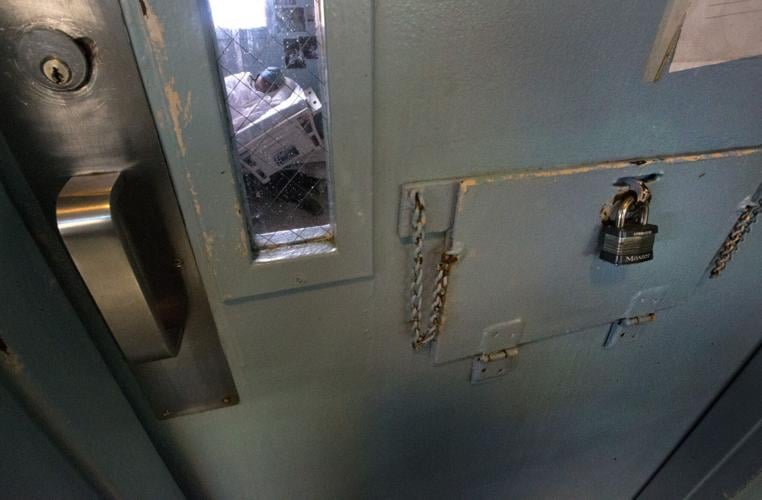
Improving the quality of prison and jail healthcare has long been a difficult problem to tackle.
Long-term, critics of the current system like Tylek argue correctional agencies should opt for public healthcare over private companies. That could be the state hospital system or state medical university system.
But given the political influence of the industry and the long-term contracts governments already have with companies, that is a long-term solution with no guarantee of success.
And even if state and local governments were to revert to a public model, it is unlikely to be a silver bullet, especially given the continued problems people in prisons with publicly operated healthcare still face.
In the short-term, advocates argue continuing to file suits and increasing transparency are needed to improve the system. Grady believes that litigation, advocating for protections for the incarcerated before municipal and state leaders, and reporting on the healthcare conditions inside jails and prisons are important tools in ensuring the incarcerated receive adequate care.
Grady says advocates aren’t asking for “top-of-the-line experimental treatment for their complicated medical condition” but rather basic, quality health care, including for common issues like high blood pressure.
“We’re talking about people who have no other option, who need basic care in order to prevent long-term premature death or disability,” she says.
Originally published in the Gambit
Support my work by sharing my newsletter with a friend, subscribing, or if you are feeling up to it, buying me a coffee :)
Oh, you can also become a paid subscriber, too. All money will be used to grow the newsletter!
I also wrote a crime novel. K, that’s it.