REPORTING: New Orleans Teacher Petitions Supreme Court To Block Louisiana's Ten Commandments Law
The latest update on legal action against Louisiana’s Ten Commandments law

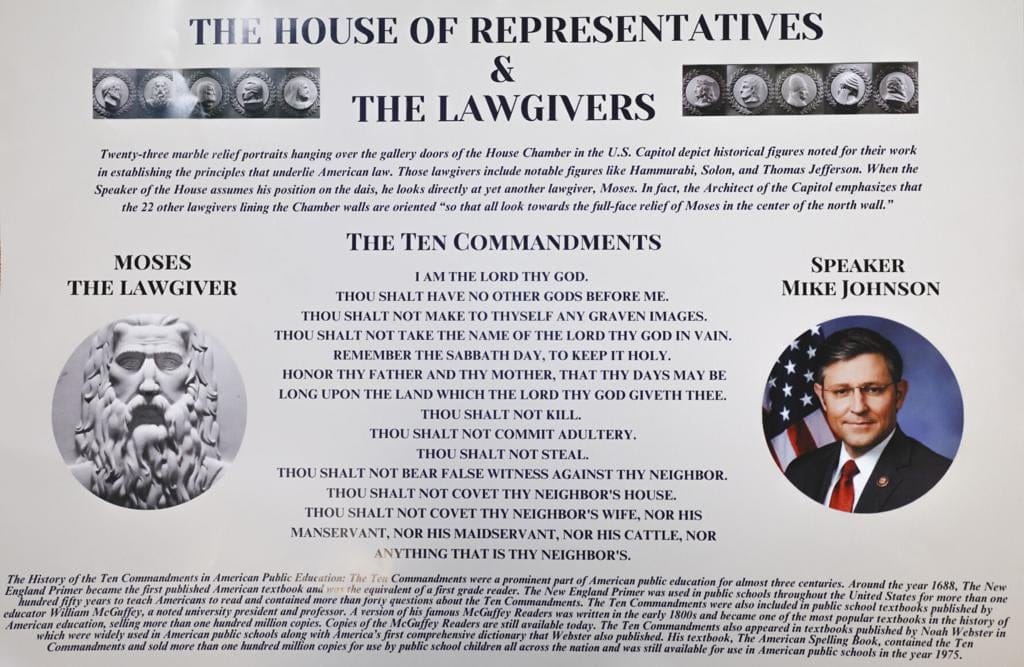
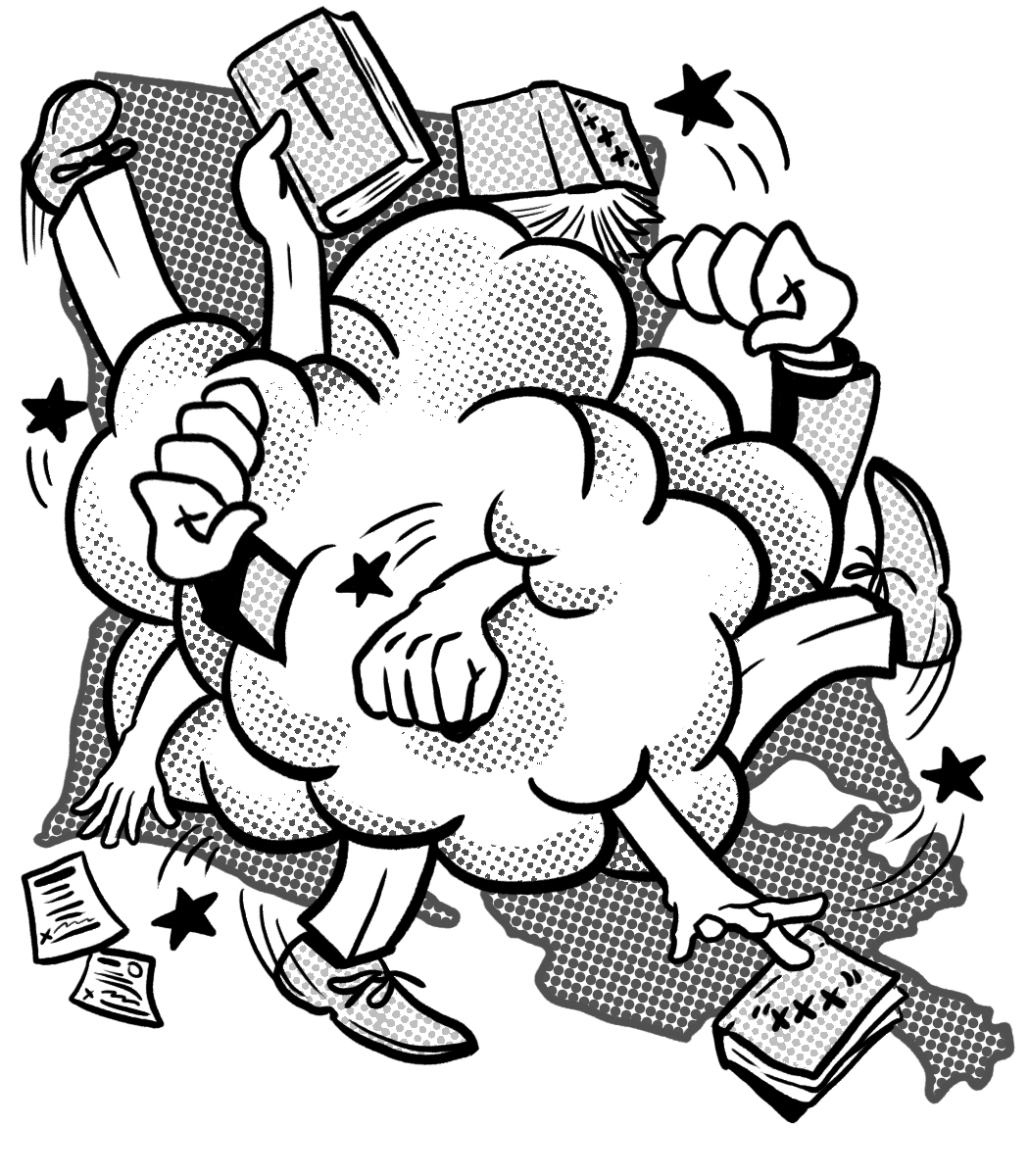
Louisiana’s 2020 Teacher of the Year, Chris Dier, has petitioned the Supreme Court to weigh in on Louisiana’s Ten Commandments law, which requires all K-12 schools and higher learning institutions in Louisiana to put Ten Commandments posters on their classroom walls. This new petition comes four months after Dier’s initial lawsuit—filed in 2024—was dismissed by U.S. District Court Judge Greg G. Guidry due to the lawsuit being deemed “premature,” since the posters hadn’t been put up in Louisiana classrooms yet.
Dier said he’s filing this new petition on the grounds that the law violates the Establishment Clause of the First Amendment, which prohibits the government from establishing an official religion, favoring one religion over another, and preferring religion over non-religion, or non-religion over religion.
Dier made it clear that he was not on some anti-religion crusade; he merely wants to uphold the constitution and “religious freedom for everybody, including Christians. This is a fight for Christians as well because there’s nothing Christian about Christian nationalism. [Christian nationalism is] a political movement.”
Dier said he’s already receiving responses from the community. “A lot of emails, a lot of Facebook messages, a lot of Instagram [direct messages from] people supporting [me]. [But] some people are not happy… It’s been interesting.”
This petition is the most recent twist in the legal battles surrounding Louisiana’s Ten Commandments law. Outside of Dier’s initial lawsuit, a separate lawsuit, Roake v. Brumley, was also filed in 2024 in the wake of the Ten Commandments law’s signing. The Roake lawsuit was filed by a multifaith group of families who had children in the Louisiana public school system. In that lawsuit, the lower courts and a three-judge panel on the ultraconservative 5th U.S. Circuit Court of Appeals ruled that the law is “plainly unconstitutional” and could not be enforced, but then the full 5th Circuit Court overturned that ruling, clearing the way for Louisiana schools to put up the posters.
But now, Dier aims to have the Supreme Court settle this issue once and for all.
If the Supreme Court were to weigh in, it’s safe to assume how they’d rule. In fact, many state leaders and supporters of the law are hoping the case reaches the Supreme Court, since one of the high court’s rulings emboldened the multi-state push for the Ten Commandments in schools in the first place.
As I’ve previously reported for Progressive Magazine:
“The push for explicit religious curricula was aided by the Supreme Court’s 2022 Bremerton v. Kennedy ruling in favor of a high school coach who prayed with his players. Though the appeals judge accused the court of ruling based on false narratives, and others have accused Justice Neil Gorsuch of misrepresenting the facts of the case in his opinion, the decision has been cited in several statehouses as justification for more religious instruction in school, including in a Louisiana committee hearing on the Ten Commandments.”
Since 1971, the nation’s high court has applied the “Lemon Test” to decide whether or not government action violated the First Amendment’s Establishment Clause. But the Supreme Court under Chief Justice Roberts has shown a willingness to disregard precedent and weakened the Lemon Test with the Bremerton v. Kennedy decision.
Dier told me in a previous conversation that he believed that forcing the Ten Commandments in public schools “is a part of a larger effort to erode separation of church and state.” There is evidence to support his claim: In the late 2010s, a handful of Christian organizations formed Project Blitz, a nationwide initiative to expand conservative Christian influence in public life, starting with easy-to-pass bills like Ten Commandments displays. Project Blitz’s work may even have served as inspiration for the Louisiana bill.
This story is still developing, but it’s of note that a petition to the Supreme Court doesn’t guarantee a case will get a ruling. The Supreme Court receives about 10,000 petitions a year and currently only takes about 60. But Dier isn’t the only one that has asked the Supreme Court to make a decision. Several families in Texas earlier in August 2026 also petitioned the Supreme Court, since Texas passed its own version of a Ten Commandments mandate.
I asked Dier if he was nervous about the prospects of this case receiving national attention if it were to reach the Supreme Court. He said, “Oh, absolutely. I was just looking at somebody on Facebook who wrote a comment under an article, and he said something like, ‘Why does this guy have so much hate?’ referring to me. And he had an AR-15 in his profile photo… Anytime you put yourself out there to fight for what is right and fight against injustice, you inevitably kind of [make] yourself a target…. But I know that what I’m doing is the right thing to do, and I would feel bad if I stood idly while this was happening. What better cause than to fight for your students and students around the country?”
If the Supreme Court doesn’t weigh in on the constitutionality of these laws, the rulings of the lower courts will stand as the binding law for their respective geographic regions, leaving the country legally fragmented. For example, since the 5th Circuit Court upheld the law, and it covers Mississippi, Texas, and Louisiana, the laws will be allowed to stand in those states. But Arkansas, on the other hand, which had its Ten Commandments law blocked by a federal court, would be constitutionally prohibited from mandating such laws.
If the Supreme Court does weigh in and finds the mandate constitutional, their ruling will be a greenlight for other conservative states to pass similar measures. There are other legal ramifications of the Supreme Court not weighing in on the laws, like different judicial regions having differing interpretations of the same legal precedent, but that’s a longer story for another day.
For now, I’ll continue to monitor this development and will continue to keep you up to date.
Support my work by sharing my newsletter with a friend, subscribing, or if you are feeling up to it, buying me a coffee :)Oh, you can also become a paid subscriber, too. All money will be used to grow the newsletter!
Follow New Southern Revolt on Instagram.
I also wrote a crime novel. K, that’s it.
Suggested reading:
 Danny Cherry Jr.
 Danny Cherry Jr.