The GOP's power in the South has collapsed
"The fight within America's new battleground is for the soul of democracy; losing means ceding control of the nation to a Republican Party that has repeatedly shown that they will never govern with the interests of all Americans in mind."

Louisiana is an ultra-ruby red state with a Christian nationalist governor, a Republican supermajority in the state legislature, and Republicans controlling all statewide elected positions.
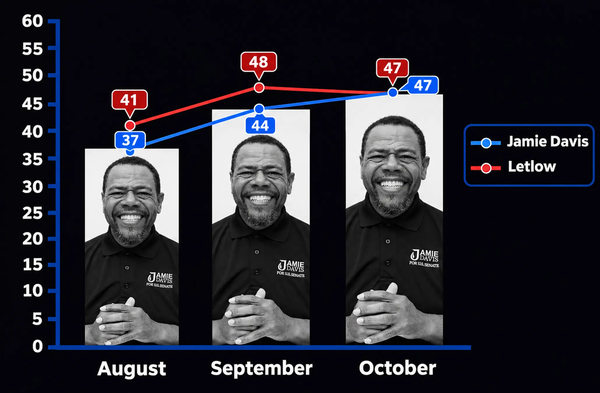
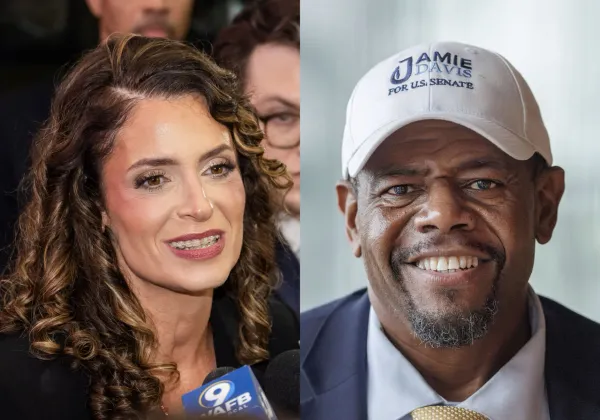
Despite all of this, in the recent Louisiana U.S. Senate race, current Republican House Rep. Julia Letlow required a last-minute infusion of over $1 million of dark money, an appearance by President Trump at a “tele-rally,” and widespread name recognition, just to beat a little-known farmer from Tensas Parish, Louisiana—population roughly 4,400—by 1.9 points.
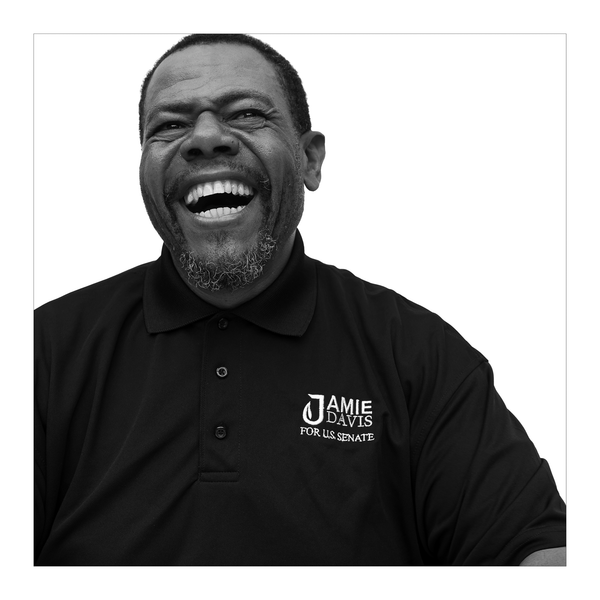
From the jump, major election forecasters pegged the race for Louisiana's open U.S. Senate seat between Letlow and her Democratic opponent, former local politician and farmer Jamie Davis, as a “safe Republican” seat. Letlow behaved as if that was the case, too.
She barely talked to the media, and refused to debate Davis; she mostly met with Republican Party insiders behind closed doors instead of meeting with voters.
It all should've been a layup for Letlow, but as one Louisiana Republican told Politico, it turned into a "knife-fight."
All 64 of Louisiana’s parishes (our version of counties) shifted to the left by an average of 20 points.
Louisiana U.S. Congressman Troy Carter recently told WDSU, "We shouldn't call Louisiana red; maybe we call it purple... Maybe we say that Louisiana is in play."
To some, that's an insane notion. Generally, some people find it easier to envision a world in which the nation collapses before envisioning one where the GOP no longer dominates the South.
The GOP has controlled state-level governments across the region for years, turning their respective states into laboratories of autocracy, where draconian laws are passed in one state before going to the next state, then the next, and so on, until marginalized Southerners are enclosed in politically hostile terrain threatening to swallow them whole.
But then came the blue wave.
As of writing this, Democrats have flipped seven Republican-held Senate seats, two dozen House districts, five governorships, and as many as 12 state legislative chambers in a historic midterm landslide.
But the “unspoken” story of the midterms, according to Louisiana pollster John Couvillon on Twitter/X, was the gains that Democrats made all across the South.
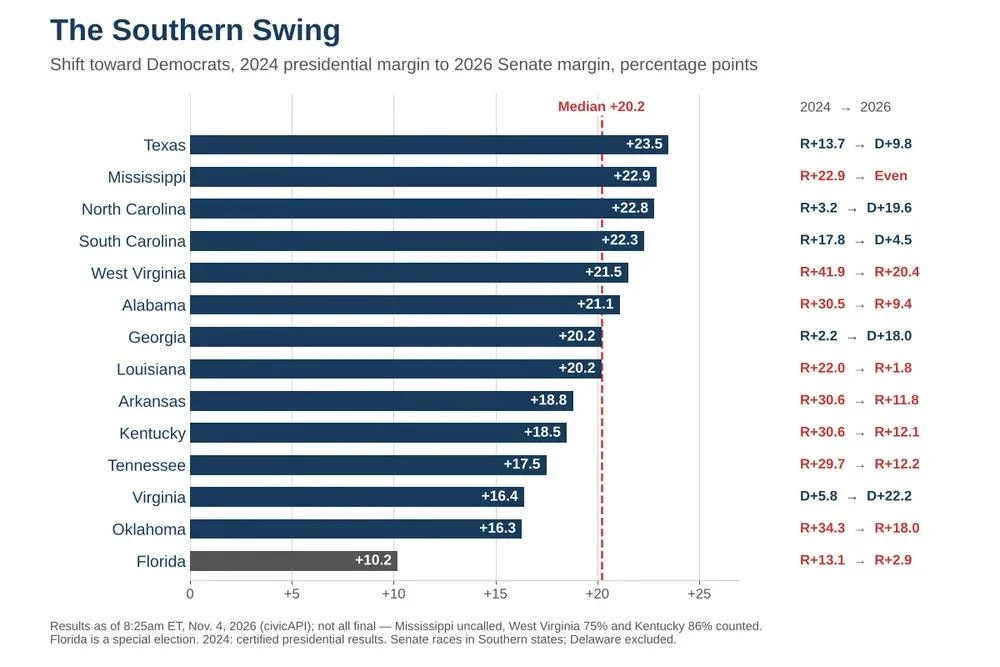
During the midterms, the GOP lost a U.S. Senate seat in South Carolina, barely retained a Senate seat in Florida, and was trounced in the Senate race in Georgia. As of now, in the Mississippi U.S. Senate race, Scott Colom's lead over Cindy Hyde is on a razor's edge; Mississippi hasn't had a Black senator since 1871, nor have they elected a Democrat since 1982.
Colom even flipped Forrest County—named after the founder of the KKK—by 29 points.
In North Carolina, the GOP lost a US Senate seat, their 16-year control of the state legislature, and multiple U.S. House congressional seats that were redrawn to be safely Republican.
The GOP lost their state legislative super-majorities in Arkansas, South Carolina, Missouri, and Florida—they even lost the Georgia governorship.
But the GOP’s most devastating losses were handed down deep in the heart of Texas.
The Texas GOP lost every single state-wide office for the first time in 32 years. The Democrats flipped a U.S. Senate seat. They elected their first Latina governor. They toppled the GOP’s dominance over Tarrant County—notably the county that removed 92 voting stations just months before the midterms. They also flipped the Texas House, which has a legislative body rife with Christian nationalist influence, largely funded by two billion preachers, Tim Dunn and Farris Wilks.
A Texas Democratic strategist told USA Today that the collapse of the Republicans within the state was the toppling of a “30-year dynasty,” and reportedly, people cried and sang and danced in the streets of Austin as they watched the Texas GOP's power dissipate into the ether.
Cory Ruth, CEO of Mergence Global, described the results in solidly red states to News3lv.com as a political reckoning: "I don't know if I've ever experienced anything like that in my lifetime."
But to me, Florida Governor Ron Desantis had better phrasing for what occurred this past election, calling it an "extinction-level event."
The fight within America's new battleground is for the soul of democracy, and losing means ceding control of the nation to a Republican Party that has shown again and again that they will never govern with the needs and rights of all Americans in mind.
A referendum on Trump and backlash to Louisiana v. Callais
The Supreme Court’s Louisiana v. Callais ruling (which gutted Section 2 of the Voting Rights Act) led to a mad dash by Southern states to redistrict their congressional districts mid-decade in order to eviscerate Black voting power.
Then came the backlash.
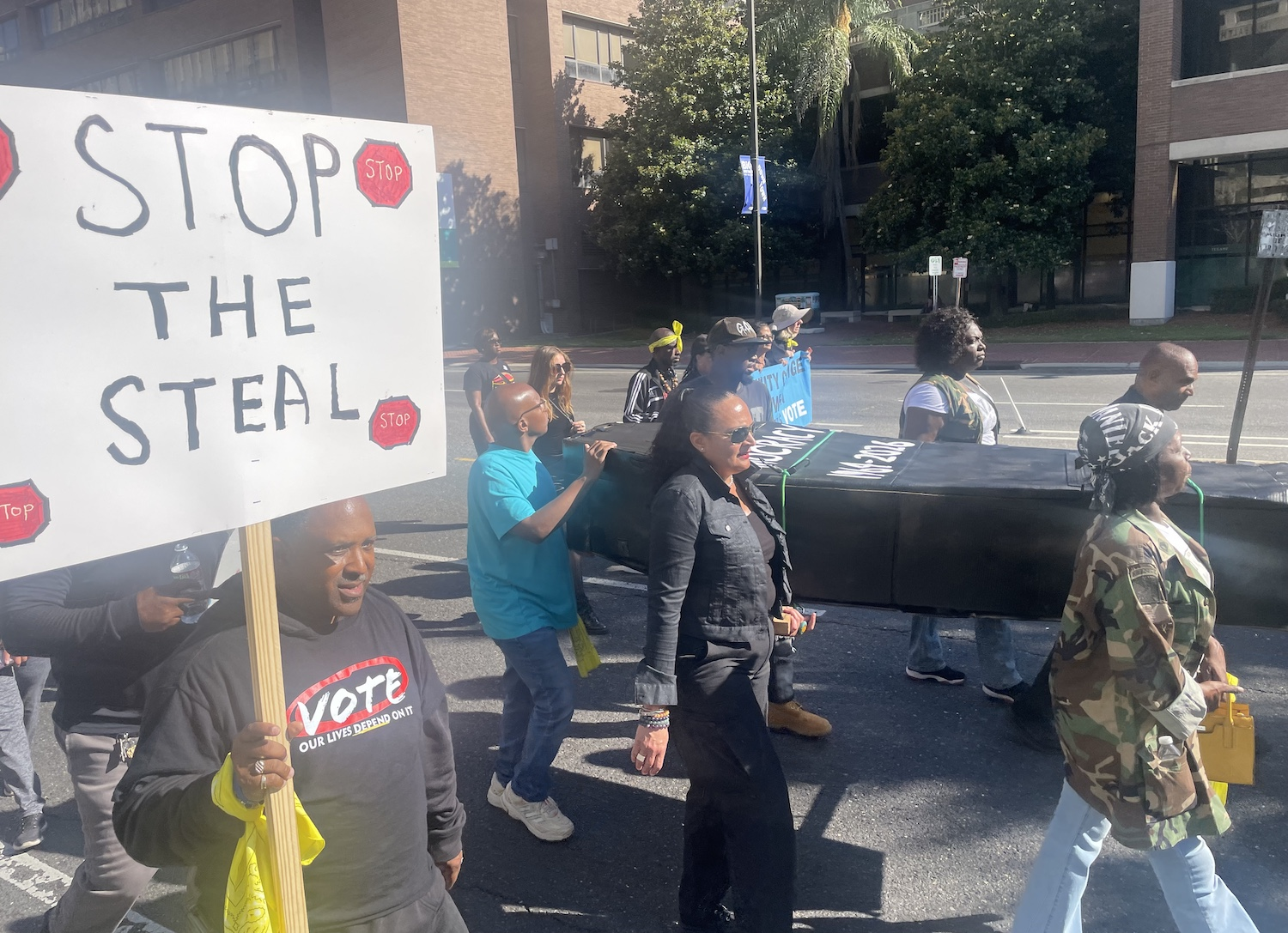
Black voter turnout across the South skyrocketed after the decision, and that trend carried into the midterms.
This occurred because activists and organizations across the South rose to the moment and set up grassroots campaigns to increase Black voter participation.
To help combat voter apathy in Louisiana after the Callais decision, Louisiana activist Laketa M. Smith went on a multi-city speaking tour called “All Roads Lead to the South.” In both Montgomery, Alabama, and Jackson, Mississippi, there were a combined total of more than 12,000 people in attendance.
Smith also created the organization “REIGNITE Louisiana.”
She told me that while on a run one night, she began to think about previous conversations with people across the state, and they all had one thing in common: they wanted to fight. "We all felt like [Civil Rights era activist] Fannie Lou [Hamer]; the next day REIGNITE Louisiana was born.”
Jamie Davis’ Louisiana U.S. Senate campaign was supported by groups like the NAACP and the Power Coalition for Equity and Justice, along with endorsements from high-profile Black Louisiana political figures.
The efforts of the organizations and activists worked.
During Louisiana's early voting period, Black folks turned out at a rate of 34%, which outpaced their share of the electorate (31%), and propelled the Louisiana Democrats to a voting lead over the GOP. As a result, Jamie Davis led Julia Letlow by eight points going into Election Day.
In total, Davis captured close to 90% of the Black vote.
Then there's the disapproval of Trump.
Because of the president’s unpopularity over the Iran War, high-profile ICE killings, mass deportations, sky-high gas prices, low affordability, and blatant corruption, many Republican candidates around the country and in Louisiana avoided mentioning ties to Trump as the general elections neared.
Trump’s unpopularity led to Republican and independent voters defecting to the Democrats. Couvillon estimated that during the early voting period, between 10% and 20% of Louisiana Republicans voted blue.
Trump called Letlow a “true America First patriot” and a “big MAGA fan.” Governor Landry described her as a “MAGA warrior.” Those MAGA credentials cost her votes.
Conservative Christian independent voter Robbi Hammett of Covington, Louisiana, told me that Letlow was “an incompetent legislator... willing to bow to [Trump's] will.” She ended up voting for Jamie Davis.
In speaking with other conservative voters, I found similar sentiments: they were tired of the culture wars, the scandals, the poor policy decisions by the Trump Administration, and the divisive partisan politics.
The GOP especially saw large defections by Hispanic voters. Diane Schnell, a one-time Republican and mayoral candidate of Hispanic descent, told me that anti-Trump sentiment had spread among Hispanic Republicans because, “[Some feel] we’re actually worse than we’ve ever [been] through any president.”
Davis avoided culture war politics and appealed to many conservatives with his focus on what he told me were the "four pillars" of his platform: affordability, education, health care, and upholding the Constitution.
Focusing on kitchen table issues like affordability has been a recent hallmark of Democratic candidates' campaigns this past election cycle.
But, the midterm's results don’t mean that people are fans of the Democrats.
Senator Raphel Warnock told the New York Times, "The party brand is not good. I think people are certainly fed up with Donald Trump... but that doesn’t mean they’re in love with Democrats.”
The South is America’s new political battleground
Democratic Georgia House Minority Leader Carolyn Hugley and Lauren Groh-Wargo stated in Democracy Docket that the South is America’s new “political battleground."
On Tuesday night, after conceding defeat, Davis stood in front of a large crowd, and gave a warning to Louisiana's governor: “You’re on notice, buddy."
He will likely run for governor.
Many Southern Democratic voters and politicians have taken the wins (and close losses) across the South as evidence that the national Democratic Party needs to fight for the region. "I have been telling my party now for a long time that it needs to invest in the South," said Georgia Sen. Raphael Warnock.
The blue wave in the South not only will reshape the makeup of Congress, but will also play a key role in the 2028 presidential election’s electoral map. Texas, Florida, Georgia, and North Carolina represent more than a third of the 270 electoral votes needed to win the White House.
The South is also the fastest growing region in the country, with immigrants, young people, and people of color flocking here. Georgia, North Carolina, Florida, South Carolina, and Texas are driving the population growth; Texas' Black population is expected to increase by 800,000 this decade.
This demographic shift would add congressional seats to the region, giving the South a larger slice of the Electoral College, and making elections in the South harder for the national Democratic Party to ignore.
The fight within America's new battleground is for the soul of democracy; losing means ceding control of the nation to a Republican Party that has repeatedly shown that they will never govern with the interests of all Americans in mind.
The Southerners that have been galvanized are ready for the political fights ahead.
Laketa M. Smith told me, “People are in fact realizing that our rights, freedom, and peace are being dismantled,” and in turn, “The South definitely has something to say.”
The people of the South did more than just speak this past election; they let out a primal roar: every single state in the South drifted 20 points to the left.
Support my work by:
- Sharing this story with a friend and on social media
- Subscribing (and becoming a paid subscriber to help grow the newsletter!)
- Or if you are feeling up to it, buying me a coffee :)
Oh, I also wrote a crime novel set in 1920 New Orleans.
YOU MAY ALSO LIKE:
 Danny Cherry Jr.